


A few years ago, Indonesian indie-folk duo Silampukau took listeners on an intimate stroll through Surabaya. The city was never merely a backdrop; it functioned as a living, breathing entity. Its bustling streets, bus terminals, humble coffee stalls, decaying colonial architecture, and everyday people navigating the margins of history formed the heart of their songwriting. For Silampukau, the city wasn’t just a physical setting—it was a repository of collective memory.
So when Silampukau introduced Arkipelagia through their releases Stambul Arkipelagia Vol. I & Vol. II, it signaled a profound artistic shift. They were no longer inviting listeners into a real, geographic location, but guiding them into an unmapped fantasy realm complete with its own lore, historical figures, conflicts, and expanding narrative arcs.
Between Reality and Imagination
A central question arises when immersing oneself in these two volumes:
Why did Silampukau need to invent a fictional realm named Arkipelagia to address themes they previously explored through the real streets of Surabaya?
This shift goes beyond renaming a location; it reflects a fundamental evolution in how the duo approaches storytelling itself.
Surabaya in their earlier discography was tangible and bounded. Arkipelagia, by contrast, is built entirely from imagination. Yet, the deeper one ventures into this sonic universe, the more strikingly familiar it feels. Arkipelagia may not exist on a globe, but its struggles mirror reality with uncomfortable precision: contested histories, shifting power dynamics, communities struggling to adapt to relentless change, and fragile memories fighting against oblivion. These are universal experiences across an archipelagic nation like Indonesia.
This is precisely why Silampukau chose the path of fiction. Fiction creates distance—and distance grants clarity.
When a narrative is anchored too specifically to a real city, it can easily remain localized. But when that city expands into an imaginary realm, localized struggles elevate into a broader critique of history, authority, identity, and shared memory. Arkipelagia is not an escape from reality; it is a new prism through which to examine it. Every story in this imaginary world acts as a mirror, reflecting long-standing anxieties. The names and places may be fictitious, but the underlying restlessness is unmistakably real.
What makes this artistic endeavor particularly compelling is its fragmented delivery. Rather than presenting a linear narrative, Silampukau offers Arkipelagia in bits and pieces. Listeners are introduced to vignettes, characters, and situations without ever receiving a complete map of the universe being built—a choice that keenly mirrors how we experience national identity.

Reconstructing Indonesia as an Archipelago
Rarely do we comprehend a nation like Indonesia through a single, grand narrative. Instead, we know it through scattered fragments: regional histories, family lore, folk traditions, political upheavals, shared tragedies, and unfulfilled hopes that rarely fit neatly together. Indonesia itself is a mosaic of fragments constantly striving to form a cohesive story.
Arkipelagia operates on this exact frequency. Rather than offering explicit explanations, Silampukau invites listeners to connect the scattered clues across their tracks. The audience becomes active interpreters, piecing together what feels like missing pages from a larger, grander volume.
At this juncture, Arkipelagia emerges as far more than a standard concept album—it is an ambitious exercise in musical worldbuilding rarely attempted in contemporary Indonesian music. Where Surabaya served as a realm for remembering, Arkipelagia serves as a canvas for reimagining.
In a socio-political climate fraught with debates over national identity and history, Arkipelagia offers an alternative space. It does not hand down rigid answers; instead, it creates a sanctuary where complex questions can coexist. It exists not to replace reality, but to help us perceive it from a fresh perspective.
Ultimately, Arkipelagia is less of a destination and more of a lens. We are accustomed to thinking of nationhood as a finished, unified entity with clear boundaries and a tidy historical timeline. Arkipelagia challenges that assumption.
Fragments to Be Reassembled
Instead of offering neat cohesion, Arkipelagia presents fragments. Its characters do not always cross paths, its histories are non-linear, and its stories do not always align. Listeners must navigate between these scattered pieces to construct their own understanding of this world.
This stylistic choice honors the very essence of an archipelago—a geography defined by both distance and connection. An archipelago consists of distinct islands that never merge into a single landmass, yet remain interconnected through human migration, language, trade, and memory.
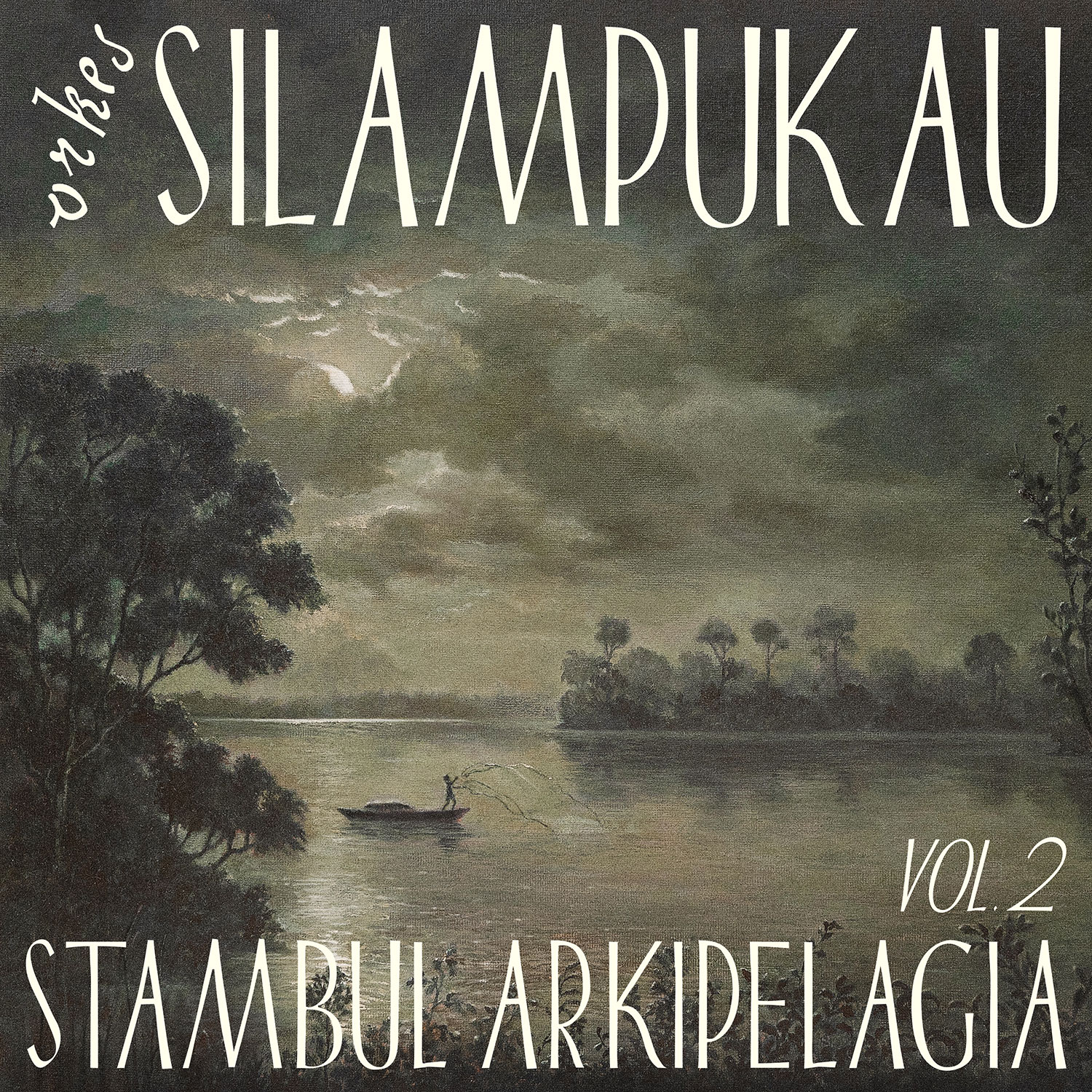
In this sense, Arkipelagia does not simply describe an archipelagic experience; it functions like one. Listeners are not given a solid mainland to stand on, but a collection of islets they must bridge themselves.
This structure feels closer to the lived reality of an archipelagic nation than many official state narratives. Daily life in such a realm is rarely experienced as a single, flawless story. It is a tapestry of local memories, oral traditions, inherited traumas, and regional realities that often conflict with official state histories. In short, we experience nationhood archipelagically.
This explains why Silampukau did not simply construct another fictional city. Cities possess centers that dictate perspective. Arkipelagia rejects centralized control, allowing multiple focal points to flourish at once. No single voice holds absolute authority; no single narrative explains the whole. There are only fragments drifting closer, moving apart, and coalescing into new forms.
Outgrowing Surabaya: An Artistic Evolution
Here lies the brilliance of Arkipelagia as an artistic project. It does not attempt to explain a nation; it demonstrates how a nation is imagined. Listening to Arkipelagia feels less like reading an official chronicle and more like gathering the collective memories of a people.
In a world increasingly fixated on rigid, singular definitions of identity and country, Arkipelagia reminds us that a nation is always composed of diverse voices, layered memories, and stories that remain inherently unfinished.
Returning to the original question—why Silampukau required a realm named Arkipelagia to tell stories that once lived in Surabaya—the answer becomes clear: some narratives are simply too vast for a single city to hold.
Some histories cannot be contained within one harbor, one street, or one urban landscape. When existing boundaries can no longer accommodate the full weight of an artist’s anxieties, reflections, and aspirations, building a new world becomes necessary.
Arkipelagia was not created because Surabaya’s stories were finished. It was born because the stories Silampukau needed to tell had outgrown Surabaya’s borders. And perhaps Arkipelagia isn’t just a world Silampukau constructed—it is an invitation for us to reimagine the world we already inhabit.