


Before we dive in, let’s unpack what we mean by the “Bloc” phenomenon. In urban planning, this is known as placemaking—the creative reactivation of neglected urban spaces, transforming derelict heritage buildings into vibrant cultural hubs.
This movement took root in Jakarta in 2019 with the launch of M Bloc Space. Spearheaded by the late legendary musician Glenn Fredly alongside visionaries Handoko Hendroyono, Jacob Gatot Sura, Lance Mengong, Mario Sugianto, and Wendi Putranto, the initiative was formalized under PT Radar Ruang Riang (RRR). Their debut project involved restoring a 1955 printing warehouse complex belonging to Peruri (the state money-printing company) in Melawai, South Jakarta.
Opening its doors on September 26, 2019, M Bloc preserved its mid-century exterior while modernizing the interior. The complex features two main zones: a permanent bazaar for local micro, small, and medium enterprises (MSMEs) in the former residential quarters of Peruri officials, and a 300-capacity live venue in the former warehouse. It quickly became a sanctuary for youth culture and served as a blueprint for creative hubs nationwide.
The formula is simple yet effective: repurpose historic state-owned or heritage buildings, preserve their architectural legacy, and fill them with local MSMEs, independent boutiques, coffee shops, and performance spaces—strictly excluding major corporate chains. It is a one-stop ecosystem for urban subcultures.
A Nationwide Expansion
Yogyakarta was the first to adopt the model. In 2021, RRR (now M Bloc Group) collaborated with the Jogja National Museum to launch JNM Bloc, instantly blending into the city’s legendary independent music and art scene.
The movement then returned to the capital with Pos Bloc Jakarta, housed in the historic Batavia-era Central Post Office. By October 2022, the concept expanded beyond Java to Sumatra, with Fabriek Bloc in Padang (a repurposed private factory) and Pos Bloc in Medan (another colonial-era post office).
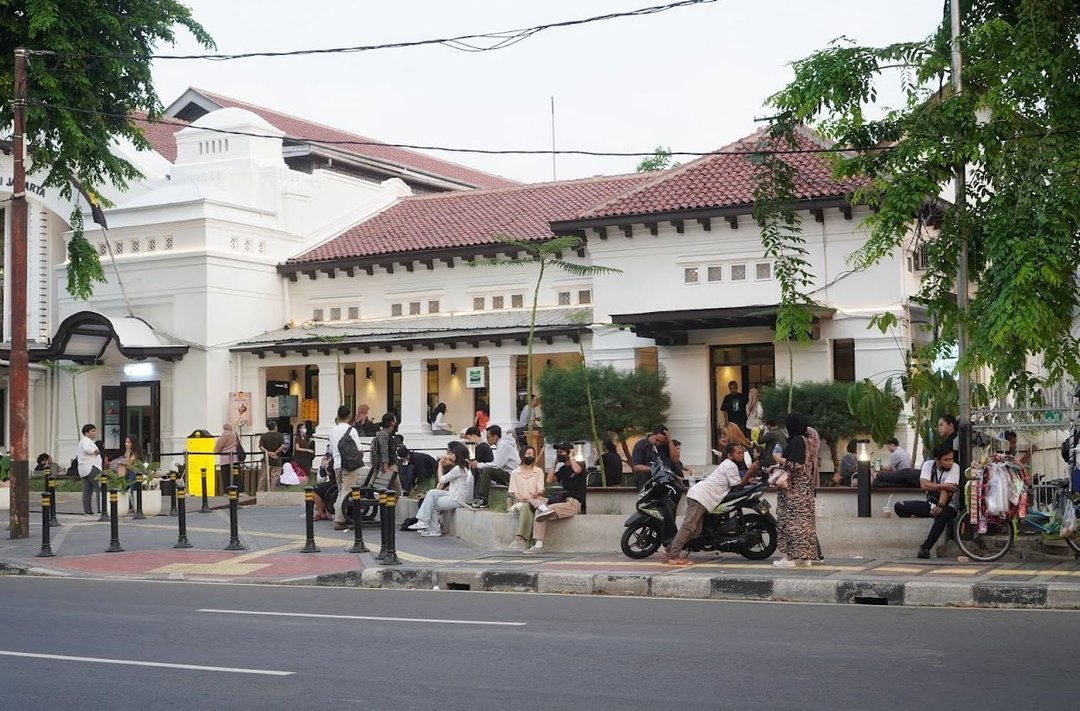
The expansion reached a historic milestone in Solo with the revitalization of Lokananta, Indonesia’s oldest state-owned recording studio. Transformed into Lokananta Bloc, it now features an amphitheater and local retail spaces alongside its recording facilities. Soon after, the group set its sights on Surabaya, transforming the historic Kebonrojo Post Office—an architectural gem designed by Dutch architect G.P.J.M. Bolsius and the former school of Indonesia’s founding president, Sukarno—into Pos Bloc Surabaya.
This rapid expansion suggested that Indonesia’s creative economy was successfully decentralizing, allowing regional creative scenes to thrive independently of Jakarta’s financial dominance.
The Corporate Acquisition: What Lies Ahead?
However, this independent trajectory faces a new turning point. In May 2026, IDN Media—the media and entertainment giant founded by Winston and William Utomo—announced its acquisition of M Bloc Group.
According to the announcement, major hubs like M Bloc Space, Pos Bloc Jakarta, Pos Bloc Surabaya, Pos Bloc Medan, and Lokananta Bloc will now operate under IDN’s umbrella. Interestingly, Padang’s Fabriek Bloc was not mentioned, likely due to its private ownership structure or strategic branding decisions.
This acquisition places the ‘Bloc’ network alongside IDN’s massive portfolio, which includes the idol group JKT48, streaming platform Saweria, festival promoter Boss Creator, and the influencer marketplace ICE. While M Bloc was never a charity, this corporate backing brings unprecedented capital and reach to sustain these creative spaces.
Yet, this transition raises crucial questions for the subculture community. M Bloc’s appeal was built on its strict curation and anti-corporate ethos. Under major corporate ownership, will this curation hold? Will these regional hubs remain authentic catalysts for local talent, or will they become standardized franchises funnelling profits back to Jakarta? The future of Indonesia’s independent creative ecosystem hangs in the balance.