

Imagine studying for weeks for a high-stakes national quiz bowl. You memorize constitutional articles, practice your buzzer reflexes, and confidently nail a tough question. But the judges buzz you out, claiming you got it wrong. When the question is passed to another team, they give the exact same answer—and get full points. You protest, but you are shut down because the judges’ word is law.
Welcome to the West Kalimantan regional finals of the 2026 MPR RI “Four Pillars of the Nation” Quiz Bowl—an event designed to teach Indonesian youth about national values and civic duty.
The Play-by-Play
On May 9, 2026, the regional finals were live-streamed on the People’s Consultative Assembly’s (MPR RI) official YouTube channel. Three high schools faced off: SMAN 1 Pontianak, SMAN 1 Sambas, and SMAN 1 Sanggau.
During the buzzer round, a question came up about the parliament’s role in electing members of the Supreme Audit Agency (BPK).
Team C from SMAN 1 Pontianak buzzed in first. A female student confidently answered: “Members of the BPK are elected by the House of Representatives (DPR), taking into account the considerations of the Regional Representative Council (DPD), and officially inaugurated by the President.”
This was 100% constitutionally correct. Yet, the judges immediately deducted five points, claiming they didn’t hear her say “DPD.”
The question was passed to SMAN 1 Sambas, who gave the exact same answer and bagged 10 points.

When the Pontianak student protested, the judges stood their ground. One judge even doubled down with a mind-blowing argument: “We warned you that articulation is key. If we didn’t hear it, that’s your problem.”
Is this an academic quiz bowl or a talent show? Maybe the issue wasn’t her articulation, but the judges’ hearing.
To make matters worse, the MC stepped in. Instead of checking the replay, he gaslit the student live on air, saying: “The decision of the panel of judges is final because they are highly competent and meticulous. Perhaps it’s just your feelings. You can watch the replay later.”
The student was left standing in defeated silence.
Thanks to the power of Indonesian netizens, clips of the incident went viral within hours. The MPR’s Instagram was flooded with angry comments. Replays clearly showed she said “DPD” loud and clear. Netizens quickly pointed out the irony: a “smart quiz” (cerdas cermat) run by “un-smart” (nggak cermat) judges.
Soon, the damage control began. The MC apologized on Instagram, admitting his “it’s just your feelings” comment was completely inappropriate. The Deputy Speaker of the MPR, Abcandra Muhammad Akbar Supratman, apologized for the judges’ oversight. The MPR Secretariat General suspended the entire panel of judges and the MC, promising a thorough evaluation.
This might seem trivial, but it’s heartbreaking. These high schoolers prepared for weeks. They stood on stage to learn about democracy and the constitution, only to learn that their voices could be arbitrarily silenced.
Sarcastic Lessons Learned
Perhaps we should thank the organizers. Because of this debacle, we learned some valuable lessons about how the system works:
1. The rules can change mid-game
It’s not a bug, it’s a feature. What’s right today might be wrong tomorrow, depending on who holds the mic.
2. You’re allowed to protest, as long as no one listens
If it weren’t for the YouTube livestream, this injustice would have been swept under the rug.
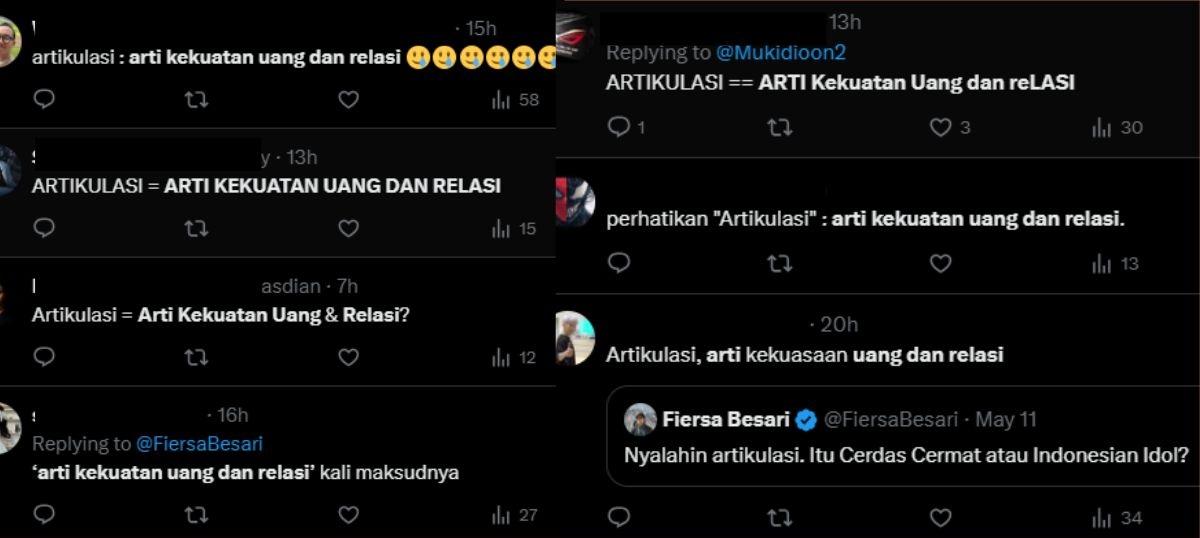
3. The New Definition of “Articulation”
3. The New Definition of “Articulation”
Netizens joked that “articulation” in Indonesia actually stands for “Authority, Wealth, and Connections.” If you aren’t heard, it’s not your voice—it’s your lack of leverage.
4. Authority trumps truth
A harsh lesson taught by a contest meant to promote national values like justice and unity.
5. Competence is claimed, not proven
The MC insisted the judges were “highly competent.” No track record needed—just blind faith.
6. ‘Evaluation’ is a magic word
Whenever things go wrong, authorities promise a “thorough evaluation”—a get-out-of-jail-free card with no real accountability.
7. Apologize to the algorithm, not the victim
The apologies went to Instagram followers, not the kids on stage.
8. The Real “Four Pillars”
The students actually did learn four pillars, just not the ones in the textbook: 1) the public can be ignored, 2) truth is silenced by power, 3) protests are easily gaslit, and 4) mistakes can be erased with a social media apology.
Sorry, Now What?
An apology is a start, but what’s next? If a simple “sorry” is enough, nothing changes. These kids need to believe that hard work matters and the system is fair. If they go home traumatized by systemic unfairness, how is the government going to pitch national values to the next generation?